 singaporecity360°
 Japanese Cemetery Park
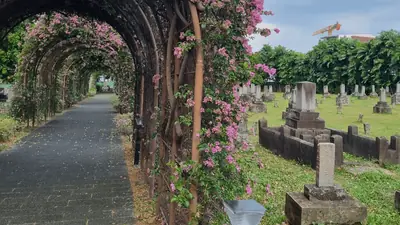
Japanese Cemetery Park sits in a quiet landed-housing estate off Chuan Hoe Avenue in Hougang, in Singapore's north-east, and is the largest Japanese cemetery in Southeast Asia.
One thing to know first
It is a working cemetery and memorial park rather than a garden attraction. Groups arriving by coach are asked to contact the Association first, and there is no cemetery at the Association's own Adam Road premises — visitors sometimes go to the wrong place.
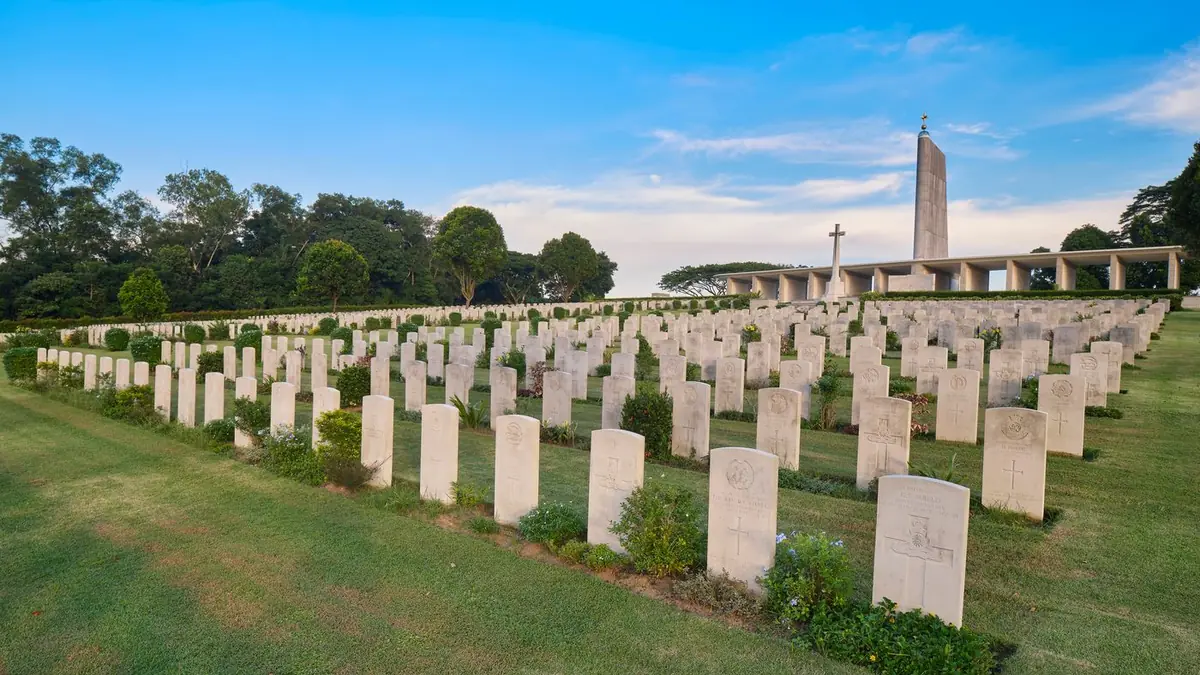
Entry is free and it is open through the day, laid out as a shaded memorial park rather than a working burial ground — the last interment was in 1973. Around 910 tombstones stand among frangipani trees, and the reason most people come is the history packed into them: the marker for Yamamoto Otokichi, reckoned the first Japanese resident of Singapore, the plots of the karayuki-san whose community founded the cemetery in 1891, and the grave of Field Marshal Terauchi, the wartime Southern Army commander.
There is no shop, no ticket desk and little in the way of signage, so it rewards a slow, unhurried read. It is a short ride from Serangoon Gardens, in the same northern cluster. The nearest MRT is Kovan on the North East Line, roughly a 15-minute walk through a quiet, largely unshaded landed estate — go in the morning, or take a bus along Yio Chu Kang Road and cut in, because no taxis wait outside and the residential streets give no cover in the midday heat.
The cemetery's origin is the thing most guidebooks skip: it was set up in 1891 by Japanese brothel keepers to bury the karayuki-san, the impoverished women sent overseas to work in Singapore's brothels, and their plain, closely set graves in the older section behind the prayer hall are the emotional centre of the site far more than the grander officers' memorials near the front.
Rain, heat, and what to do about it
Live readings and forecasts from NEA. Four days is the limit — past that, nobody is forecasting, they are showing you an average.
Southwest Monsoon
June to September
Short, sharp early-morning showers and occasional squall lines. Drier overall than the northeast wet phase.
The other good window. Rain tends to arrive early and clear, leaving usable afternoons. This is also when haze can occur, which is worth checking rather than assuming.
Plan your Japanese Cemetery Park stop
Straight-line distance from the three places a visitor has already heard of.
9.0km
north
8.2km
north-east
12km
west
Japanese Cemetery Park, in every light
Nearby, on foot
In The North — close enough to collect on the same trip out.
Contains information from Tourist Attractions accessed on 2026-08-01 from data.gov.sg, made available under the terms of the Singapore Open Data Licence version 1.0.