Peranakan Museum
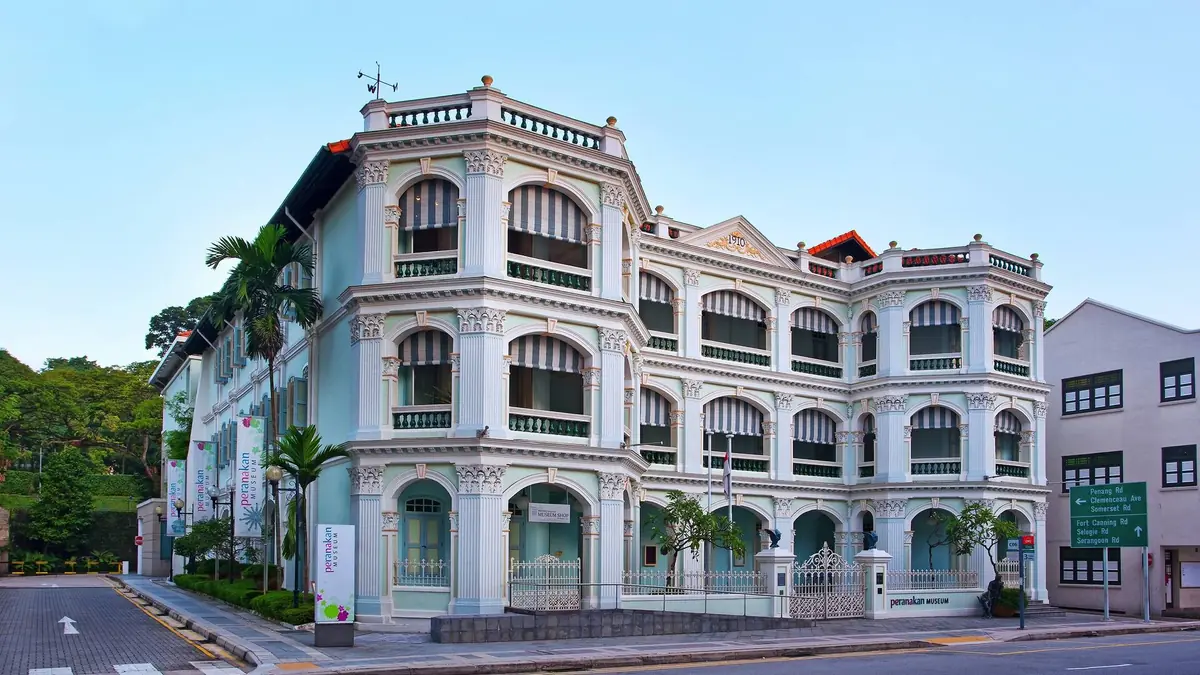
The best collection of Peranakan material anywhere, and the one place that treats all four Peranakan communities rather than only the Chinese. Reopened after a long redevelopment.
39 Armenian Street, Singapore 179941
TicketedNot an imported culture but a local one: what happened when foreign traders married local women and their descendants became something neither side recognised. The word means "locally born".
Counted inside the other groups, not separately
Formed here and along the Straits over centuries, from the trade routes that made Southeast Asia a crossroads.
Baba Malay — a creole forged from Hokkien and Malay, and the Peranakan language most common in Singapore. Now spoken by very few people fluently, which is why you will hear it on stage and in museums more than on the street.
Peranakan means "locally born" in Malay, and that is the whole idea. From the 15th century onwards, merchants and travellers — Chinese, Indian, Arab, European — settled in the ports of the Malay-Indonesian archipelago and married into local communities. Their descendants were not their fathers' culture transplanted, and not their mothers' either. They were something new, and it only happened here: in what is now Singapore, Malaysia, Brunei and Indonesia, with outposts as far as Phuket, Bangkok and Yangon.
The best-known are the Peranakan Chinese, the Baba-Nyonya — Baba for the men, Nyonya for the women. Hokkien traders married Malay women; the children spoke Baba Malay, ate food cooked with Malay spices to Chinese technique, dressed in the kebaya, and kept Chinese ancestral rites. Under the British they took to English education early and became the merchant and professional class of the Straits Settlements — which is why they are also called Straits Chinese, and why their houses are the most elaborate shophouses in the city.
But Peranakan is not only Chinese, and this is the part almost every guide gets wrong. The Peranakan Museum itself names four communities: the Peranakan Chinese, the Chetti Melakans or Peranakan Indians, the Jawi Peranakans, and the Arab Peranakans. Chetti Melakans descend from Tamil traders who married local women and are Hindu, speaking a Malay creole with Tamil in it. Jawi Peranakans descend from Indian and Arab Muslim traders and Malay women. Same mechanism, different ancestries, four distinct cultures.
What makes the Peranakans worth a visitor's time is that the culture is legible in objects: a beaded slipper, a tiffin carrier, a tiled house front, a dish that takes two days. And it is genuinely endangered — Baba Malay has very few fluent speakers left, and the families who kept the rites are small in number. The museums are not nostalgia here; they are the record.
Five things that mark something out as Peranakan the moment you spot them.
Hokkien grammar and vocabulary poured into Malay. Listen for it in Peranakan theatre, which is where the language is most alive.
A sheer embroidered blouse worn over a batik sarong, fastened with a kerosang — three linked brooches — rather than buttons. The Singapore Airlines uniform is a version of it.
Beaded slippers, worked in glass beads finer than a grain of rice. A single pair could take months, and making them was how a nyonya's patience and eyesight were judged.
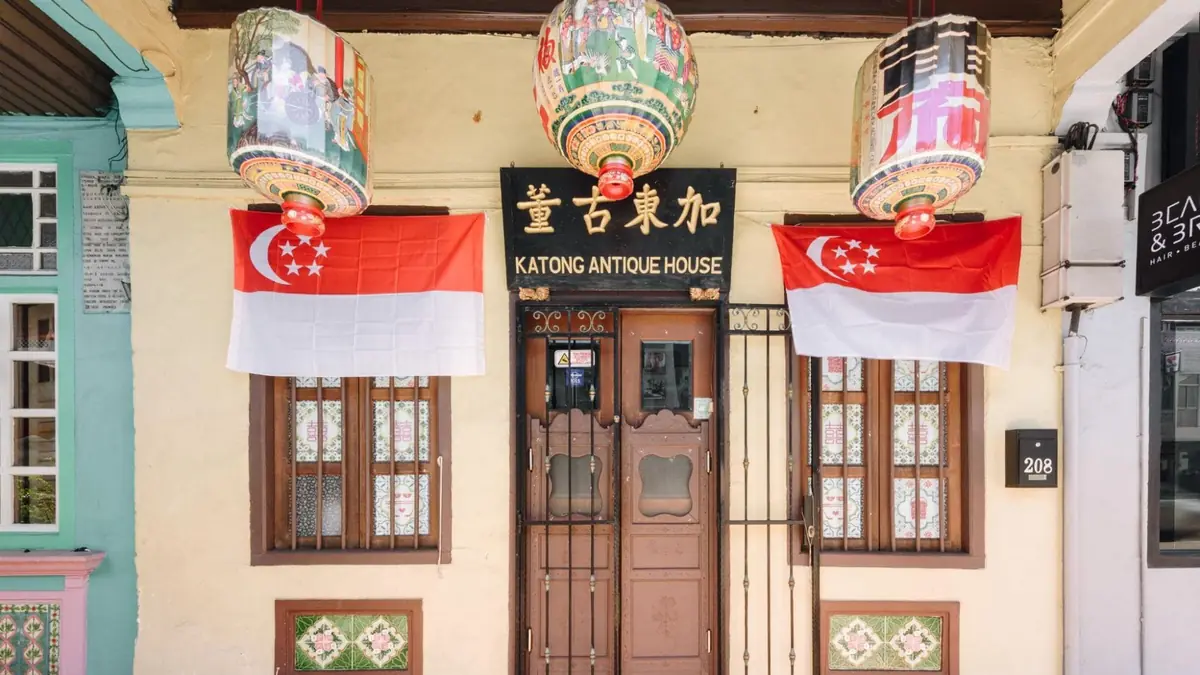
Majolica tiles on shophouse facades and stair risers — the fastest way to spot a Peranakan house front in Katong or on Emerald Hill.
Famille rose porcelain in pink, turquoise and yellow, commissioned from China to Peranakan taste. Instantly recognisable once you have seen a shelf of it.
Places of worship, museums and the streets the community actually built.
The best collection of Peranakan material anywhere, and the one place that treats all four Peranakan communities rather than only the Chinese. Reopened after a long redevelopment.
39 Armenian Street, Singapore 179941
Ticketed
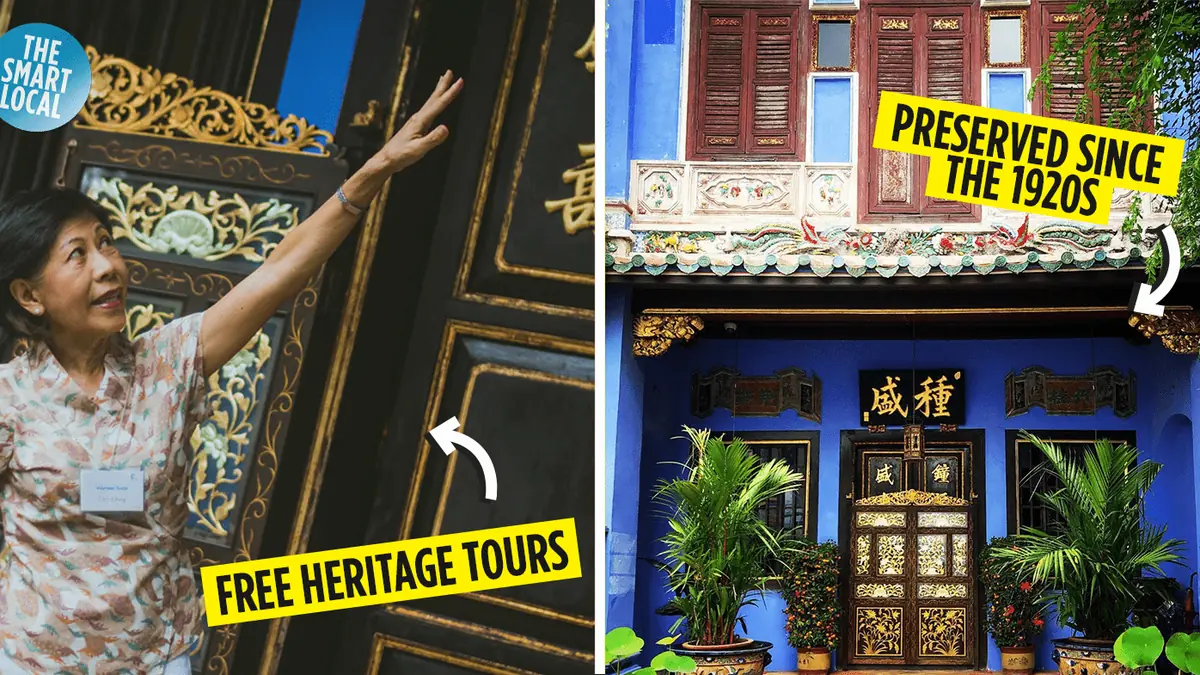
A terrace house on Neil Road restored to how a Straits Chinese family lived in it around 1928 — not a gallery with objects in cases, but rooms. Visits are by booked guided tour only and numbers are small, so book well ahead.
Closed for extensive restoration and not reopening until 2027 — check before planning around it.
Free to enter
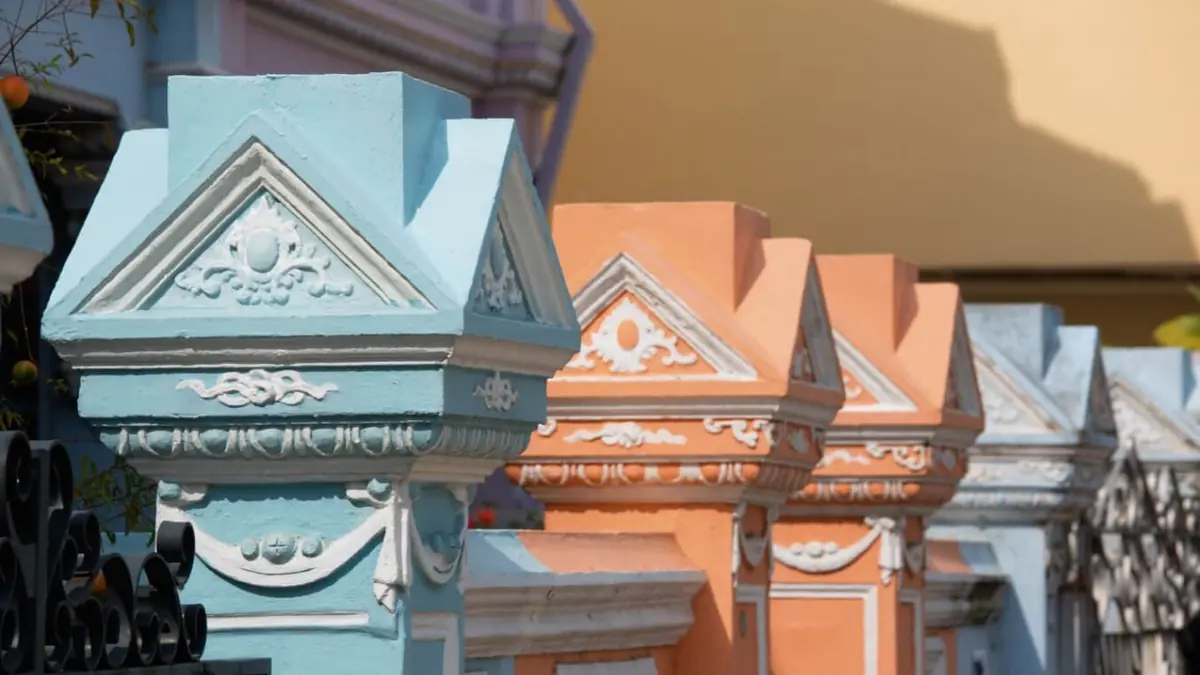
The Peranakan heartland in the east. Koon Seng Road has the most photographed shophouse terrace in Singapore — pastel facades, majolica tiles, pintu pagar swing doors. It is a residential street: photograph the buildings, not through the windows.
Free to enter
A private Peranakan collection in a Joo Chiat shophouse, shown by its owner. Opening is irregular — call first. We have not been able to confirm its current operating status.
TicketedThe most labour-intensive cooking in Singapore. Ayam buah keluak — chicken with the black nut of the kepayang tree, which is poisonous until buried and fermented, and takes days to prepare. Laksa lemak in the Katong style, thick with coconut. Babi pongteh, itek tim, otak-otak, kueh pie tee, and a table of nyonya kueh in colours that look artificial and are not — blue from the butterfly pea flower, green from pandan.
Most of these follow lunar or Islamic calendars, so they shift against the Gregorian year. Public holidays close some attractions and fill others.
The Peranakan Chinese keep it, with their own dishes and their own ancestral rites layered on top.
Tomb-sweeping. The Peranakan observance is elaborate and one of the clearest surviving family rituals.
Facts here were read from the National Heritage Board's Roots archive and each place's own operator, and re-checked on 2026-08-02. Anything we could not confirm is flagged on the card rather than smoothed over.