mostly Tamil, and much older than Little India
Indian Singapore
Tamil is one of Singapore's four official languages. The oldest Hindu temple here was founded in 1827 — not in Little India, but in the middle of Chinatown, where it still stands.
At a glance
SHARE OF RESIDENTS About one resident in eleven
ARRIVED From 1819 onwards — sepoys in the East India Company's regiments, convict labourers who built much of early Singapore, traders, clerks and dockworkers, overwhelmingly from Tamil-speaking south India.
LANGUAGE Tamil is an official language, alongside English, Malay and Mandarin. The community also includes Malayalam, Punjabi, Hindi, Gujarati, Bengali and Sindhi speakers.
how they got here, and what it left behind
The history that still shows
Indians were part of Singapore from the first year of the settlement, not a later wave. Sepoys came with the East India Company. Indian convicts, transported here as labour, built St Andrew's Cathedral and much else that visitors now photograph without knowing who laid the bricks.
The oldest Hindu temple in Singapore is not in Little India. Sri Mariamman was founded in 1827 by Naraina Pillai, a clerk who had arrived from Penang with Raffles, and it sits on South Bridge Road in the heart of Chinatown — because that is where the Indian community lived first. The temple stands opposite a mosque and a few doors from Chinese temples, which is the most honest picture of old Singapore available in one photograph.
Little India came later, growing around cattle yards and brick kilns along Serangoon Road. It is the one historic district that still functions primarily as a working neighbourhood for the community that named it, rather than as a visitor attraction — busiest on Sunday, when migrant workers get their day.
The Chulia Muslims — Tamil-speaking Muslims from the Coromandel coast — are a distinct strand again, and built Masjid Jamae on South Bridge Road in the 1820s. Indian Singapore is not one religion any more than it is one language.
all free to enter unless we say otherwise
Where to see it
Places of worship, museums and the streets the community actually built.
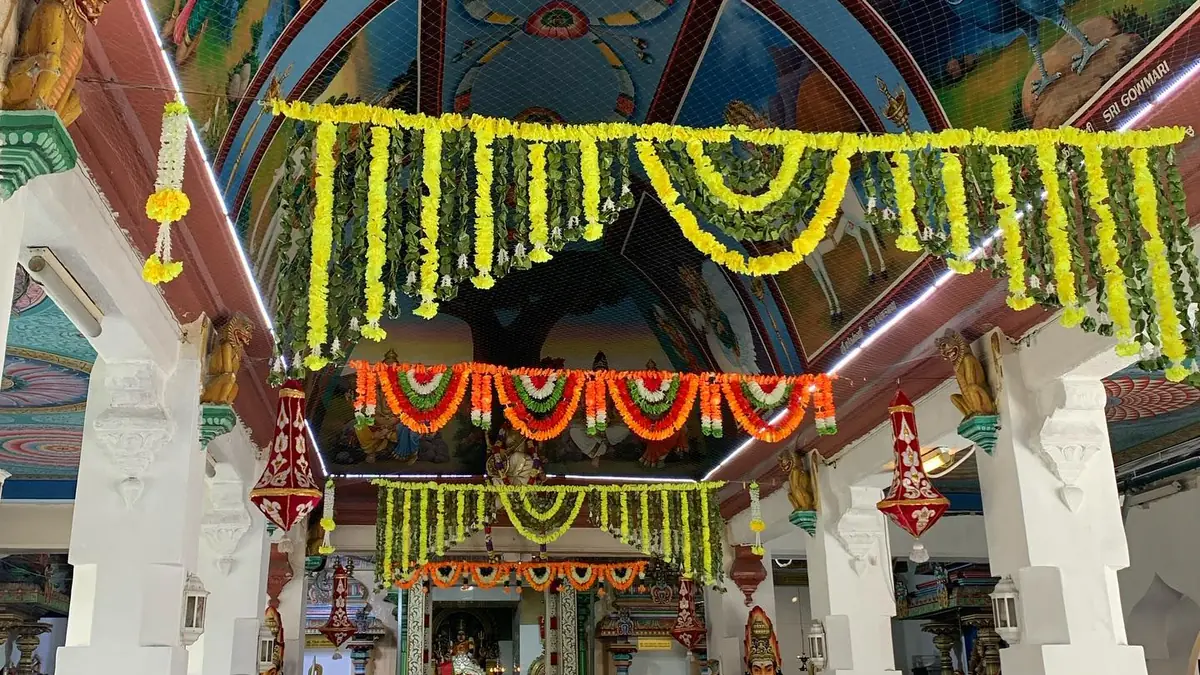
The oldest Hindu temple in Singapore, 1827 Sri Mariamman Temple
Founded by Naraina Pillai for the Tamil community and dedicated to Mariamman, associated with rain and with protection from epidemic disease. The five-tiered gopuram over the entrance dates from 1925, replacing a three-tiered one. In October or November it hosts Theemithi, when male devotees walk barefoot across about three metres of burning charcoal before stepping into a pit of milk.
244 South Bridge Road, Singapore 058793
Visiting: Remove shoes. Cover shoulders and knees. Photography is usually allowed in the courtyard but ask before shooting a ceremony or the inner shrines.
Free to enter 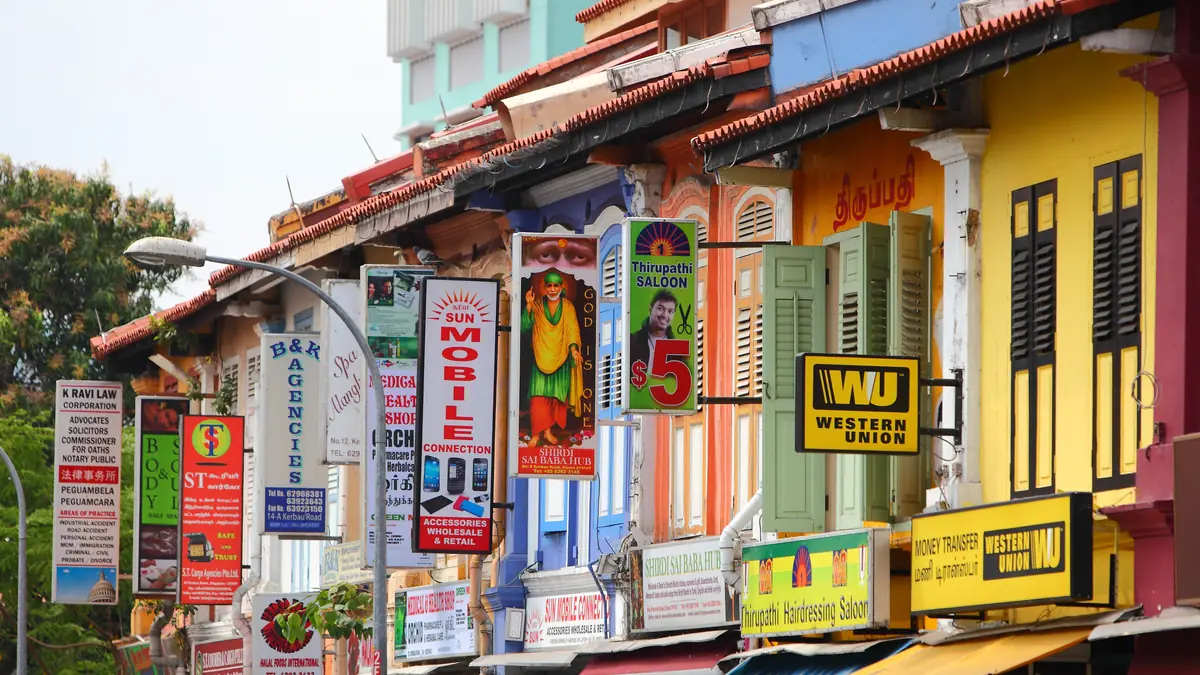
A working neighbourhood, not a set Little India
Serangoon Road and the lanes off it. Tekka Centre for the wet market and the food, Buffalo Road for the flower garlands, and the Sunday crowds that make it the busiest place in Singapore for a few hours.
Free to enter 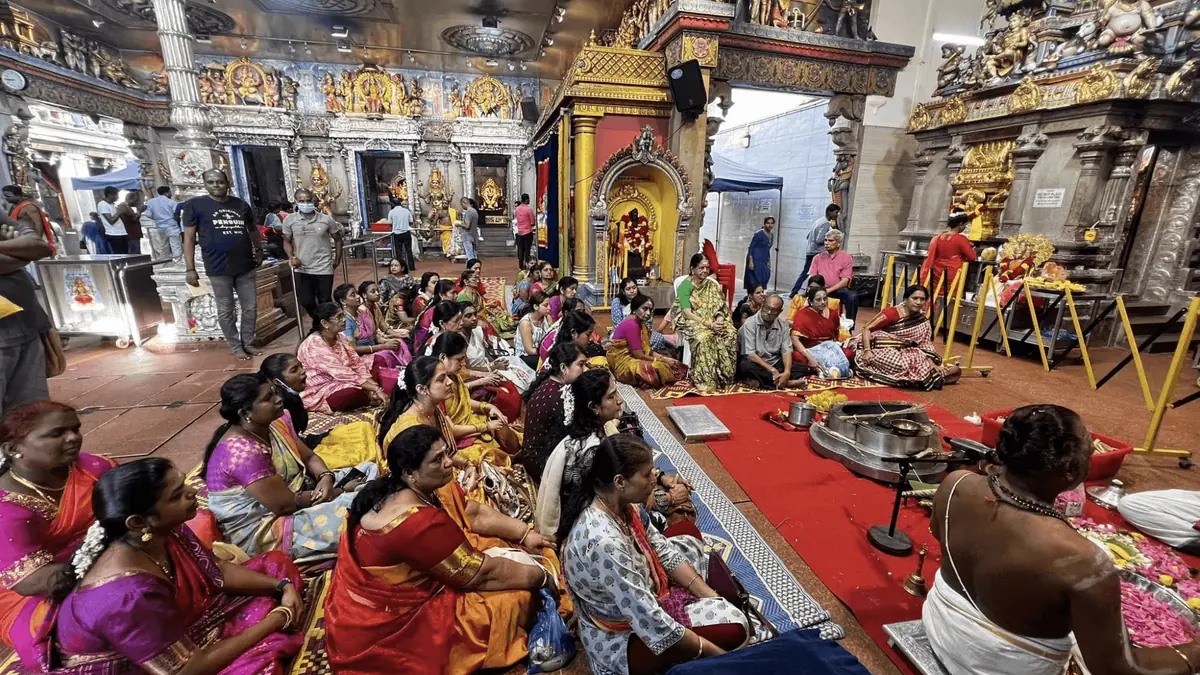
Built by Bengali labourers Sri Veeramakaliamman Temple
On Serangoon Road, dedicated to Kali. Founded by Bengali workers who dug the area's brick kilns and canals — a different community again from the Tamil founders of Sri Mariamman.
Free to enter 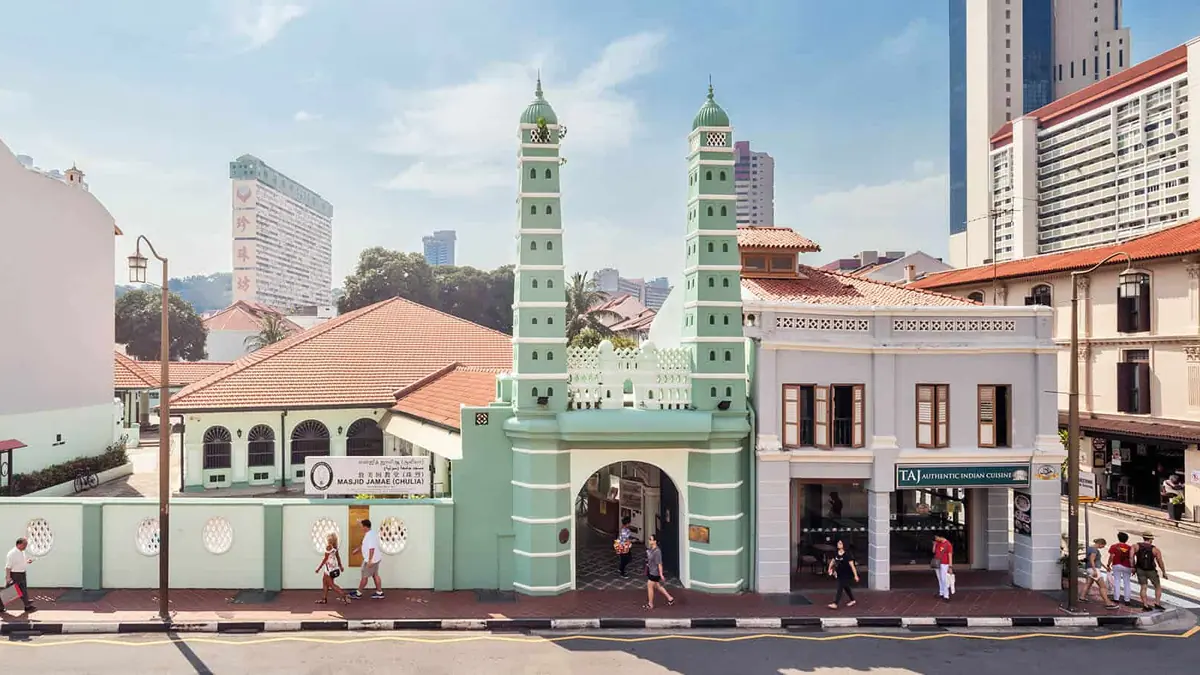
The Tamil Muslim mosque Masjid Jamae (Chulia Mosque)
Built in the 1820s by Chulia Muslims from the Coromandel coast, on South Bridge Road a short walk from Sri Mariamman. Its twin towers are unlike anything else on the street.
Free to enter the most reliable way in
Eat it
Roti prata pulled and flipped to order, thosai, biryani, fish head curry — a Singapore invention, not an Indian one — and banana leaf rice eaten with your right hand. Both south and north Indian kitchens; the difference is real and worth asking about.
Where to eat all of this →
dates move — check the year
The calendar
Most of these follow lunar or Islamic calendars, so they shift against the Gregorian
year. Public holidays close some attractions and fill others.
Deepavali
October or November Serangoon Road's light-up runs for weeks. A public holiday.
Thaipusam
January or February A procession from Sri Srinivasa Perumal to Sri Thendayuthapani, devotees carrying kavadi frames pierced into the skin. The most intense religious event in Singapore and entirely open to watch respectfully.
Theemithi
October or November The fire-walking at Sri Mariamman. Expect very large crowds.
Pongal
Mid-January The Tamil harvest festival; Little India marks it for days.
the other four
Keep going
Facts here were read from the National Heritage Board's Roots archive and each place's
own operator, and re-checked on 2026-08-02. Anything we could not confirm is
flagged on the card rather than smoothed over.