the people who were already here
Malay Singapore
Not immigrants to the region but indigenous to it. Malay is Singapore's national language, and the reason the anthem is sung in a language most citizens do not speak at home.
At a glance
SHARE OF RESIDENTS About one resident in eight
ARRIVED Indigenous to the Malay archipelago. The community also absorbed Bugis, Javanese, Boyanese and Minangkabau arrivals, who came as traders and seafarers.
LANGUAGE Malay — Bahasa Melayu — is the national language. It is why the anthem, Majulah Singapura, is in Malay, and why military drill commands still are.
how they got here, and what it left behind
The history that still shows
When Raffles landed in 1819 there was already a settlement here under a Temenggong, and the island was part of the Johor-Riau sultanate. The treaty that gave the East India Company its trading post was signed with Sultan Hussein Shah, who was installed to sign it — and Kampong Glam was the land granted to him in return.
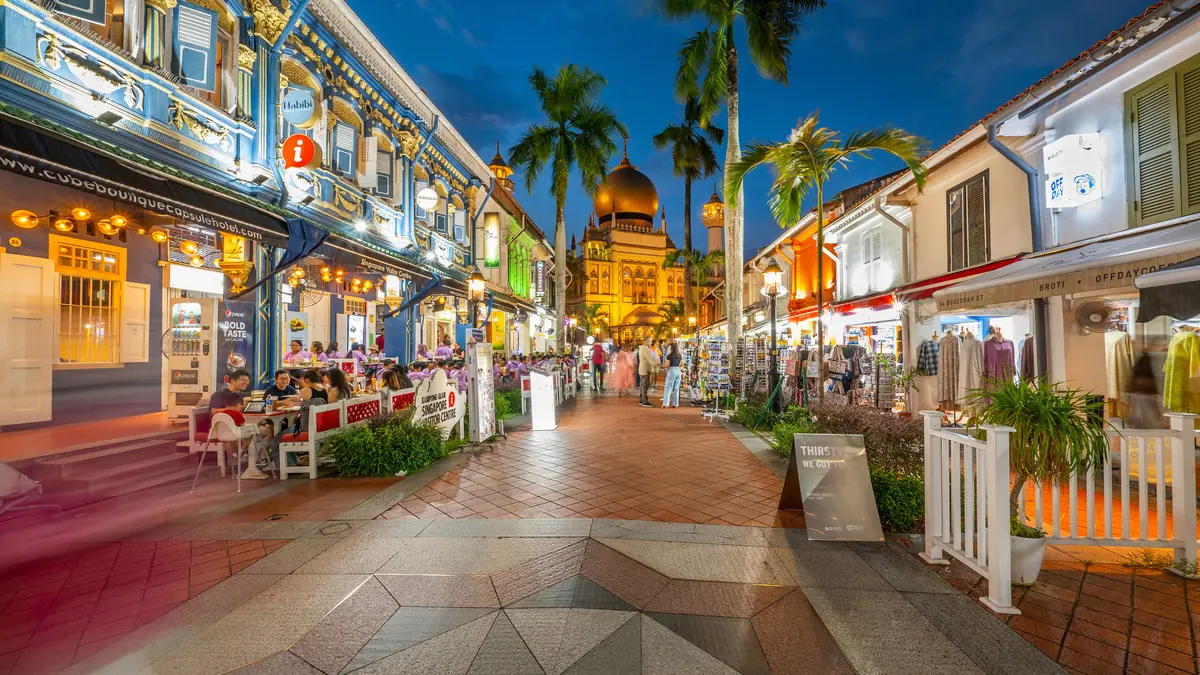
So Kampong Glam is not a themed district. It is the old royal quarter: the sultan's compound, the mosque his agreement paid for, and the streets that grew around them. The Malay Heritage Centre occupies the Istana Kampong Glam itself, the palace built for his descendants in the 1840s.
The community was never only Malay in the narrow sense. Bugis seafarers from Sulawesi, Javanese, Boyanese from Bawean island and Minangkabau from Sumatra all settled and were absorbed. Street names still record it — Bussorah, Baghdad, Kandahar and Muscat mark the Arab and Muslim trading networks that ran through the quarter.
Malay remains the national language, which surprises visitors who assume that is English or Mandarin. It is a deliberate acknowledgement of who was here first.
all free to enter unless we say otherwise
Where to see it
Places of worship, museums and the streets the community actually built.
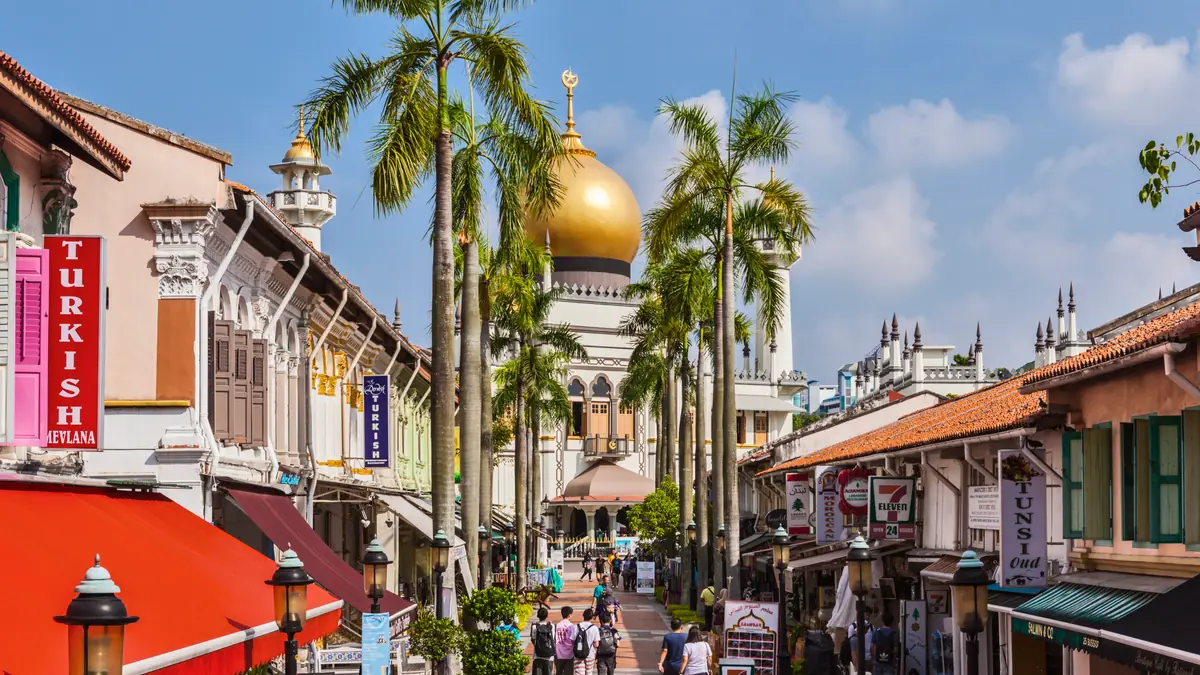
The royal quarter Kampong Glam
Named after the gelam tree. Bussorah Street frames the mosque dome down its length; Haji Lane behind it is narrow, painted and full of independent shops. The two streets are 200 metres apart and belong to different centuries.
Free to enter 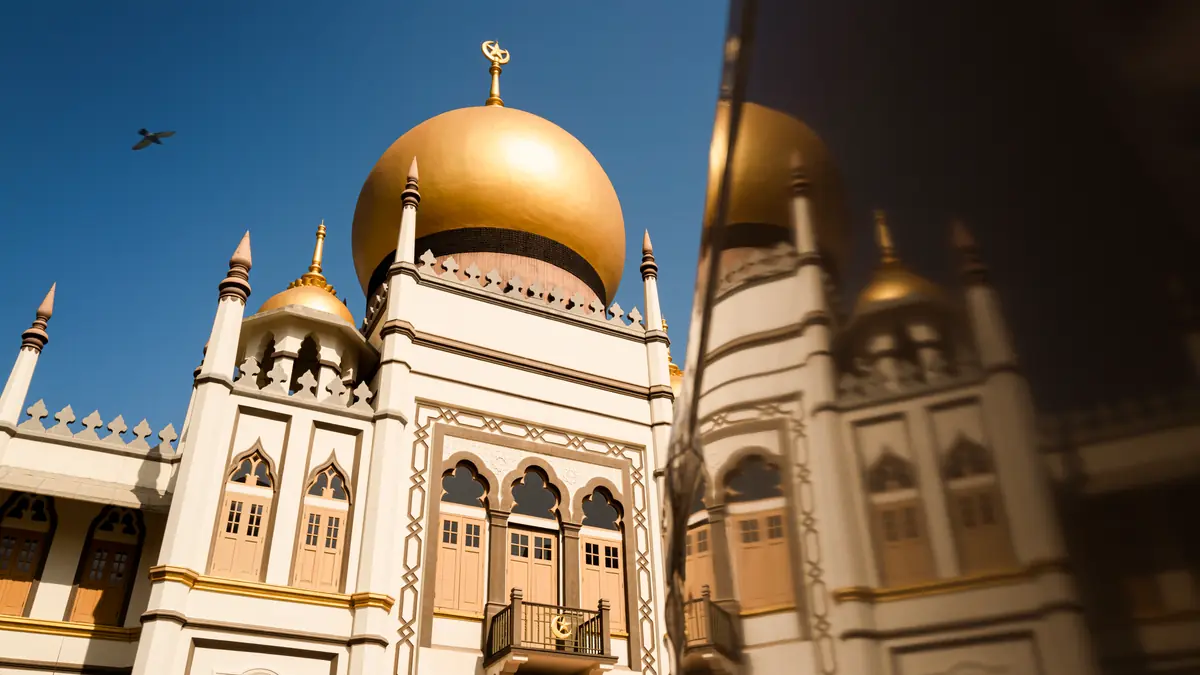
The mosque the 1824 agreement built Sultan Mosque (Masjid Sultan)
The first mosque here dates to 1824, funded partly by 3,000 Spanish dollars the East India Company put into the royal building fund. The building you see replaced it — begun 1928, essentially finished by February 1932, designed by the Irish architect Denis Santry of Swan & Maclaren in the Indo-Saracenic style. It was a waypoint for pilgrims from across the region heading to Mecca, and it still announces the start of Ramadan for Singapore.
3 Muscat Street, Singapore 198833
Visiting: Open to non-Muslim visitors outside prayer times. Cover shoulders and knees; robes are lent at the door. Take shoes off. Do not walk in front of anyone praying.
Free to enter 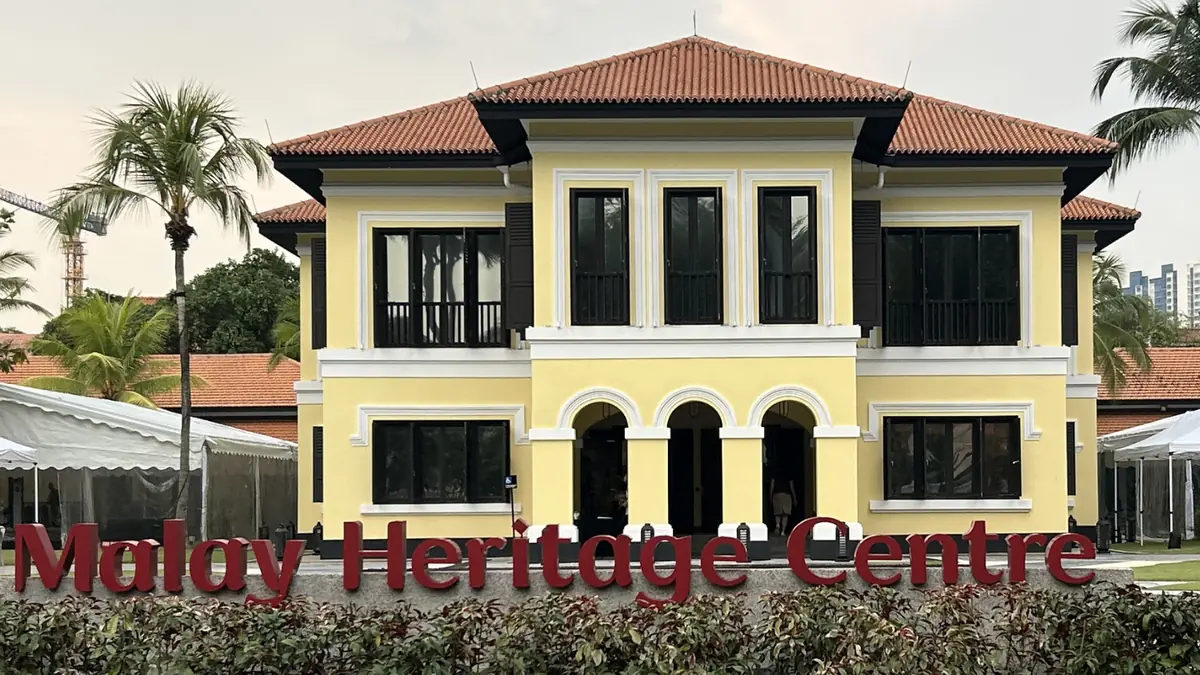
Inside the sultan's palace Malay Heritage Centre
Housed in the Istana Kampong Glam, built for Sultan Hussein Shah's descendants. Check ahead — the centre has had extended closures for redevelopment.
Ticketed 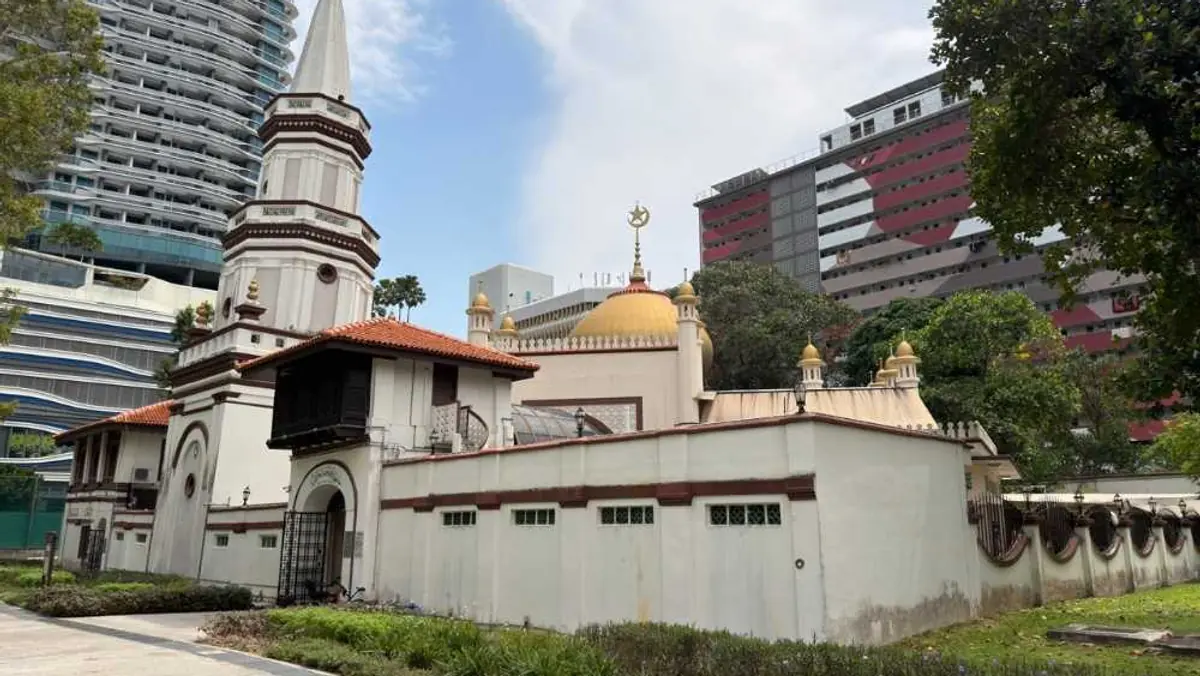
Named for the woman who paid for it Hajjah Fatimah Mosque
Built in the 1840s and named after the Malaccan-born businesswoman of Bugis descent who funded it — rare then and rare now. Its minaret leans, visibly, which locals will tell you about before you notice.
Free to enter the most reliable way in
Eat it
Nasi lemak — coconut rice, fried anchovies, egg, sambal. Mee rebus, mee siam, nasi padang picked from the tray at a stall counter, satay grilled over charcoal, and beef rendang. Look for the halal certificate rather than assuming.
Where to eat all of this →
dates move — check the year
The calendar
Most of these follow lunar or Islamic calendars, so they shift against the Gregorian
year. Public holidays close some attractions and fill others.
Ramadan
Shifts about 11 days earlier each year The Kampong Glam bazaar around Sultan Mosque is the best street-food month of the year. Eating in front of someone fasting is fine but noticed — the polite move is to wait for the evening.
Hari Raya Puasa (Eid al-Fitr)
End of Ramadan Geylang Serai's light-up is the bigger display; Kampong Glam is the more walkable one.
Hari Raya Haji (Eid al-Adha)
About two months later A quieter, more religious observance than Puasa.
the other four
Keep going
Facts here were read from the National Heritage Board's Roots archive and each place's
own operator, and re-checked on 2026-08-02. Anything we could not confirm is
flagged on the card rather than smoothed over.