 singaporecity360°
 How to order at a Singapore hawker centre
The whole ritual, decoded — how to grab a seat, order at the stalls, ask for your coffee the local way, and not get fined on the way out.
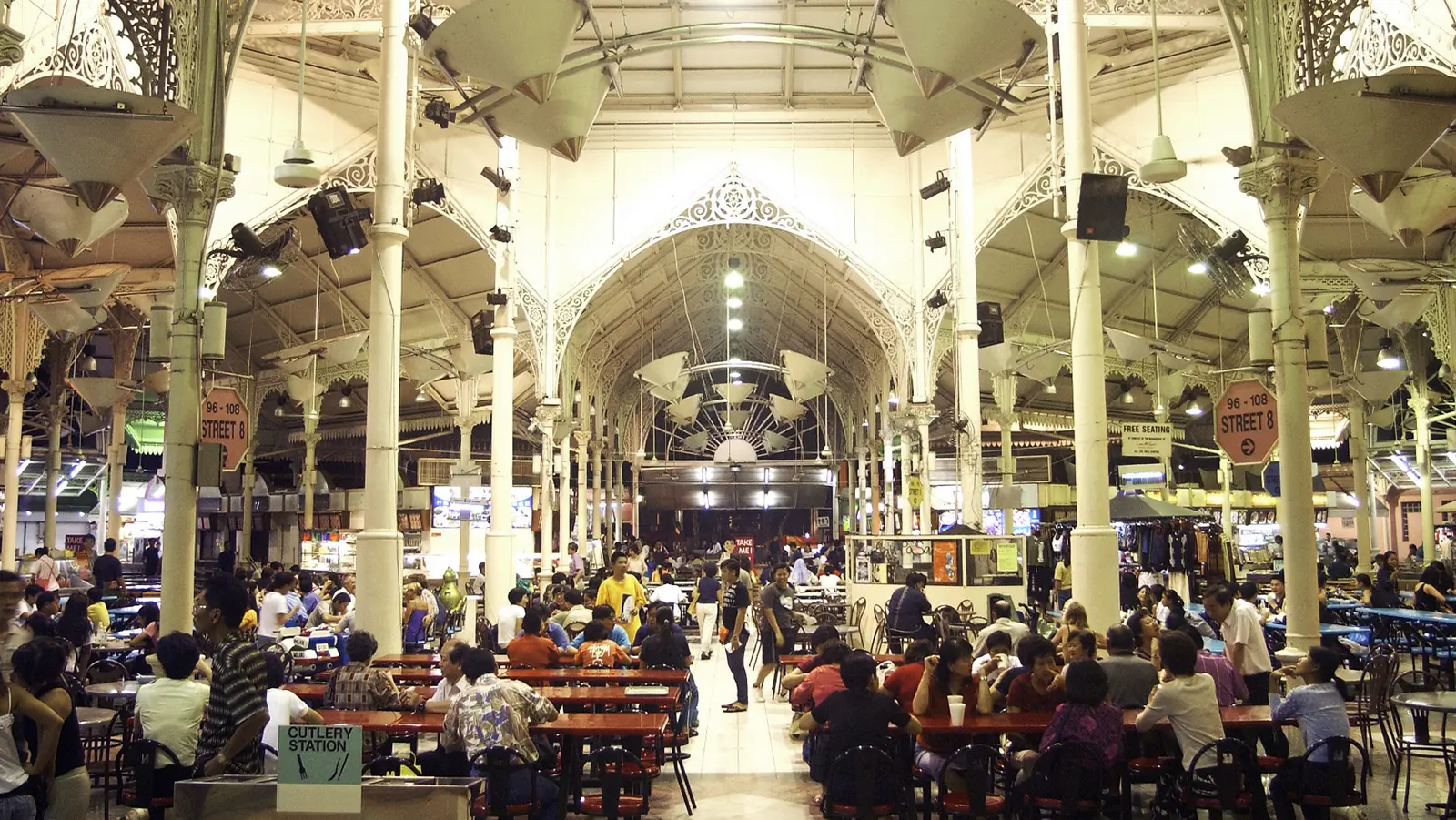
Chope a seat with a packet of tissues, order and pay at each individual stall (mostly cash), get your drink from the separate drinks vendor, and return your tray when you’re done. A full meal runs S$3–6 — the best-value eating in the city.
Everything, in one glance
A cuisine the world protects
In 2020, UNESCO added Singapore’s hawker culture to its list of the Intangible Cultural Heritage of Humanity — the country’s first such honour. What was recognised isn’t the food alone, but the ritual around it: strangers of every background sharing one long table, recipes handed down stall by stall, a whole society eating together for a few dollars. Ordering here isn’t just lunch — it’s the single most local thing you can do.
A hawker centre isn’t a food court (air-conditioned, in a mall, chain-run and pricier) or a kopitiam (a small neighbourhood coffee shop). It’s the open-air, many-stall original.
Ordering, step by step
Seven moves, in order. Do them once and you’ll feel like a local by the second stall.
- Walk the whole place first. Stalls each specialise in one dish, so browse before you commit. The long local queue is usually the tell — join it.
- Chope a seat. Reserve a table by leaving a packet of tissues on it before you queue. It’s the universal local signal — see below.
- Order and pay at each stall. There’s no central till. Order at the stall, say your portion and any preference ("less spicy"), and pay them directly.
- Pay cash — or scan. Carry small notes; many stalls are cash-only. More and more take PayNow QR, and tourist wallets like Alipay+ and WeChat Pay are increasingly accepted — but don’t assume every stall does.
- Collect, or wait. Most stalls hand you the plate to carry yourself ("self-service"). Busier ones give a table number and bring it. Read the little sign.
- Get drinks separately. The drinks stall is its own vendor. Order your kopi, teh or lime juice there — buying a drink is also how you "earn" the seat.
- Return your tray. When you’re done, clear your table and return the tray to the racks. This is now the law, not just manners — details below.
The tissue-packet "chope"
"Chope" is Singlish for reserving a seat. Because you queue and pay in person, locals claim a table first — by dropping a small packet of pocket tissues on it. It’s cheap, unmistakable, and everyone respects it.
- Carry a packet of tissues (any convenience store, ~S$0.50).
- Find a free seat, leave the packet, then go order.
- Don’t over-chope — grabbing many seats for a group before anyone arrives is frowned on.
- An umbrella, a name card or a water bottle work too, in a pinch.
The kopi & teh decoder
"Kopi" is coffee, "teh" is tea — then you stack modifiers. Once it clicks, it’s a simple code.
| Say this | You get |
|---|---|
| Kopi | Coffee with condensed milk and sugar — the default. |
| Kopi O | Black coffee, no milk, still sweet ("O" = no milk). |
| Kopi C | Coffee with evaporated milk and sugar ("C" = evaporated milk). |
| Kopi O Kosong | Black coffee, no milk, no sugar ("kosong" = empty). |
| Kopi Peng | Iced coffee — condensed milk and sugar over ice. |
| Kopi Gao | Extra-strong, thick coffee (less water). |
| Teh | Tea with condensed milk and sugar. |
| Teh O | Tea, no milk, with sugar. |
| Teh Tarik | "Pulled" milk tea, poured between cups to froth it. |
| Teh Halia | Ginger milk tea. |
Mix and match: "Kopi C Kosong Peng" = iced coffee, evaporated milk, no sugar. "Teh O Siew Dai" = tea, no milk, less sweet.
Clear your table — it’s the law
Since 1 September 2021, returning your tray isn’t just polite — it’s enforced.
- Return the tray, clear the litter
Stack your used plates and bowls on the tray-return racks and wipe any obvious mess when you leave.
- The fine is real
A first lapse is a written warning; after that it’s a S$300 fine, and repeat offenders can be taken to court.
- Keep halal separate
Racks are split into halal and non-halal trolleys — return your tray to the matching one.
- Who’s exempt
The frail elderly, people with disabilities and children under 12 aren’t enforced against.
Five beginner-friendly centres
Central, easy to navigate, and stacked with famous stalls.
| Centre | Where | Why go |
|---|---|---|
| Maxwell Food Centre | Chinatown | The easiest first choice — central, simple to navigate, home of Tian Tian chicken rice. |
| Lau Pa Sat | CBD | A gorgeous Victorian cast-iron hall. Come in the evening for Satay Street, when the barbecue stalls fire up on Boon Tat Street. |
| Chinatown Complex | Chinatown | Singapore’s largest hawker centre — maximum variety, and the Michelin-recognised soya-sauce-chicken stall is here. |
| Old Airport Road | East | A local favourite, often rated the best for sheer quality. Slightly off the tourist trail — which is the point. |
| Newton Food Centre | Central | Central and open late, famous from Crazy Rich Asians — but touristy and pricier. Fine to visit, not the best value. |
What to order first
Can’t go wrong with any of these. Explore each one on our food guide.
Frequently asked
How do you order at a hawker centre in Singapore?
Walk the whole centre first, reserve a seat by leaving a packet of tissues on it ("chope"), then order and pay at each individual stall — there’s no central cashier. Carry cash, though many stalls now take PayNow and even Alipay+ or WeChat Pay. Order drinks from the separate drinks vendor. When you finish, clear your table and return the tray.
What does "chope" mean?
Chope is Singlish for reserving a seat. Because you order and pay in person and often wait for your food, locals claim a table first by leaving a small item on it — traditionally a packet of pocket tissues. It’s cheap, recognisable and universally understood. Taking a choped seat is considered rude.
Do I have to return my tray? Is there really a fine?
Yes. Since 1 September 2021 it’s mandatory to return your tray and clear your table litter. A first lapse gets a written warning; after that the fine is S$300, and persistent offenders can be taken to court. The frail elderly, people with disabilities and children under 12 are exempt. Just stack your plates on the tray-return racks — keeping halal and non-halal trolleys separate.
Can I pay by card or phone at a hawker centre?
Increasingly, yes. Many stalls take PayNow QR, and tourist e-wallets including Alipay+ and WeChat Pay are more and more common — but plenty of stalls are still cash-only, so always carry small notes and coins. See our guide to paying with Alipay and WeChat Pay in Singapore.
How much does a hawker meal cost?
A full plate of local food is roughly S$3–6, and a drink S$1.50–3 — which is why hawker centres are the best-value eating in one of the world’s pricier cities. There’s even a Michelin-recognised stall serving chicken rice for a couple of dollars.
A few caveats
- Cashless is spreading, not universal
PayNow and Alipay+/WeChat Pay turn up at more stalls every year, but many are still cash-only. Carry small notes so a great stall isn’t off-limits — more in our Alipay & WeChat Pay guide.
- Peak hours are a scrum
Roughly noon–2pm and 6–8pm the seats vanish. Chope early or eat slightly off-peak.
- Michelin, but check the year
Some hawker stalls hold Michelin recognition, but stars and Bib Gourmand listings change year to year — treat any "Michelin" claim as "worth the queue," not a guarantee.
Grounded in UNESCO’s Intangible Cultural Heritage listing (2020) and the National Environment Agency’s tray-return regulations, with kopi terms cross-checked across local guides, on 2026-08-15.