 singaporecity360°
 Is Mandarin spoken in Singapore?
Short answer: yes — and English is everywhere too, so any visitor gets by easily. If you speak Mandarin, all the better.
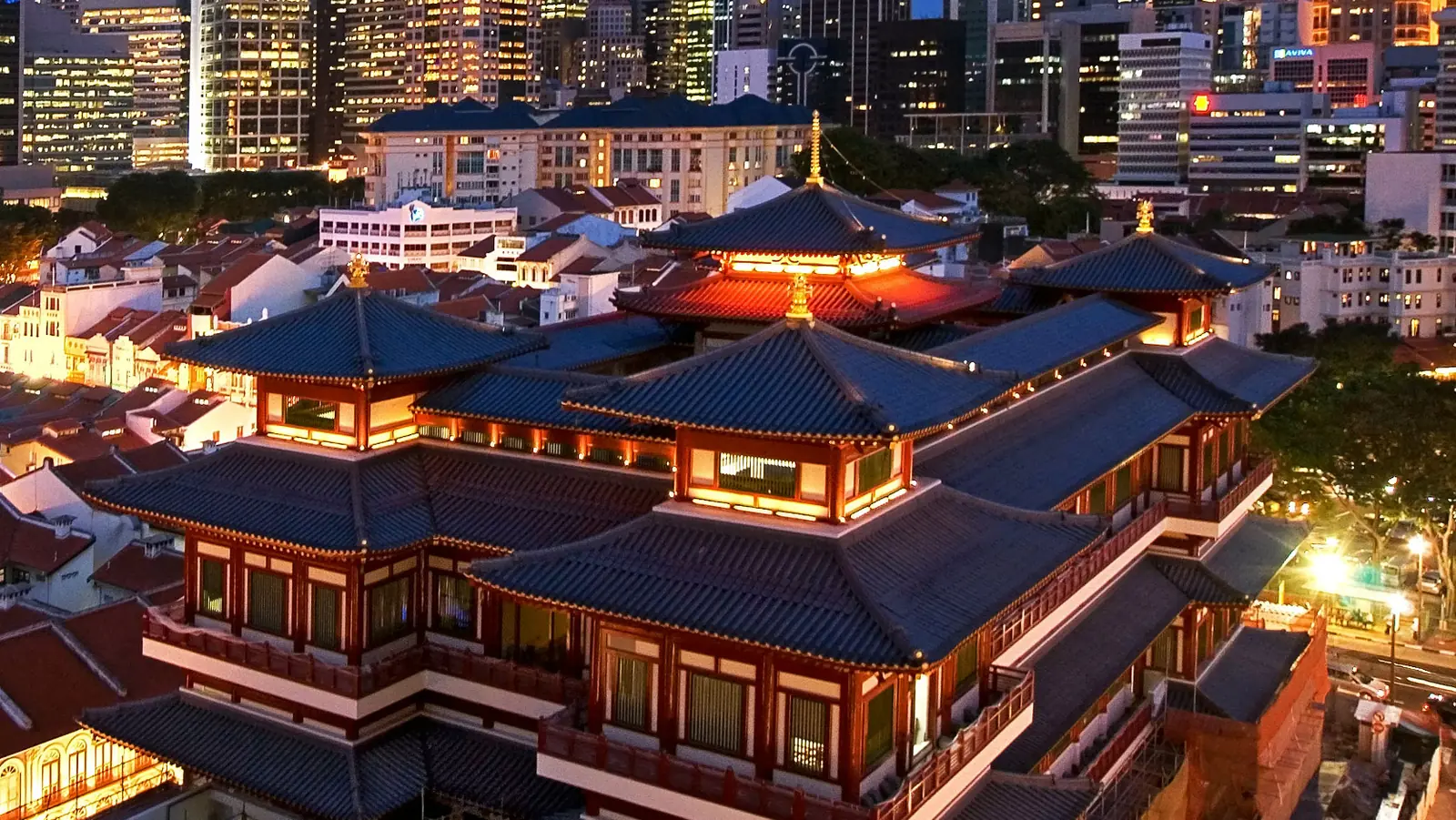
Yes. About three in four Singaporeans are ethnic Chinese, and Mandarin is one of the country's four official languages — so you'll hear it everywhere, especially in Chinatown, hawker centres and local shops. English is the shared working language, so signs, menus and staff switch to it easily. You'll get by in either.
A city that speaks both
Singapore grew up bilingual on purpose. Every child learns English at school plus a "mother tongue" — Mandarin for most Chinese Singaporeans. The result: English is the language that runs the country, but Mandarin is alive in daily life. So English-speakers are covered everywhere — and if you speak Mandarin, that's the best of both worlds.
One thing to know: the mix keeps shifting toward English at home, especially among the young — but Mandarin remains everywhere you'll go as a tourist.
Where each language helps
You'll rarely be stuck. But here's roughly where Mandarin shines and where English takes over.
- Chinatown shops & temples
- Hawker centres & kopitiam
- Wet markets
- Older shopkeepers & taxi uncles
- Neighbourhood (heartland) stores
- The airport & hotels
- The MRT & signs everywhere
- Banks & big shops
- Museums & major attractions
- Younger people & office staff
Six Singlish words
Not a barrier — just friendly local slang. Drop one and watch a stallholder smile.
| Word | What it means |
|---|---|
| lah | A friendly little word added for emphasis — "okay lah", "can lah". |
| chope | To reserve a seat — often by leaving a packet of tissues on it. |
| makan | To eat, or a meal (from Malay). "Let’s go makan." |
| kopi | Coffee. A kopitiam is a traditional coffee shop. |
| can / cannot | Yes, that works / no, it doesn’t. Wonderfully direct. |
| shiok | Delicious, or just great. The highest praise for food. |
Five easy wins
- In Chinatown, hawker centres and markets, just speak Mandarin — it’s completely normal.
- At hotels, the airport and attractions, English is quickest — even a few words go far.
- Read MRT signs by the station name — they show Chinese characters too, so you won’t get lost.
- Keep a translation app for menus in the odd English-only café — but you’ll rarely need it.
- Try one Singlish word ("can!" or "shiok!") — locals love it and it breaks the ice.
Frequently asked
Will people understand me if I speak Mandarin in Singapore?
Very often, yes. About three-quarters of Singaporeans are ethnic Chinese and Mandarin is one of the four official languages, so you’ll be understood in Chinatown, hawker centres, markets and most everyday shops — especially by older people. In hotels, banks and big attractions, staff may reply in English, but you’ll manage.
Do I need to speak English to visit Singapore?
No, but a little helps. English is the shared working language — it’s on every sign, menu and ticket machine, and it’s what staff at hotels, the airport and the MRT use. If your English is limited, you can lean on Mandarin plus a translation app and get around comfortably.
Are signs in Chinese?
Signs are English-first, but MRT station names and many public notices also show Chinese characters, so the transport system is easy to read. Menus in Chinese-majority areas are often bilingual too.
Is Singapore Mandarin the same as in China?
Close, and completely mutually understandable, with some local words and a lot of English mixed in. You’ll notice small differences in vocabulary and accent, but you won’t have trouble being understood.
What is "Singlish"?
It’s Singapore’s casual, mixed everyday English — English grammar sprinkled with Malay, Hokkien and Mandarin words, and a friendly "lah" on the end. It’s not a barrier; locals switch to standard English with visitors easily. Learning a couple of words is a nice ice-breaker.
About the numbers
Language data comes from the census, and the picture slowly shifts.
- Figures are Census 2020
The official national count. Newer yearly surveys show slightly more English at home — we stick to the census to be consistent.
- "Speak at home" isn’t "can speak"
Many who use English at home also speak fluent Mandarin — the share who understand it is higher than the home-language number.
Grounded in Singapore’s Census 2020 (Department of Statistics) and the national bilingual policy, on 2026-08-07.